Bald Eagles #25-28, #25-35, #25-36
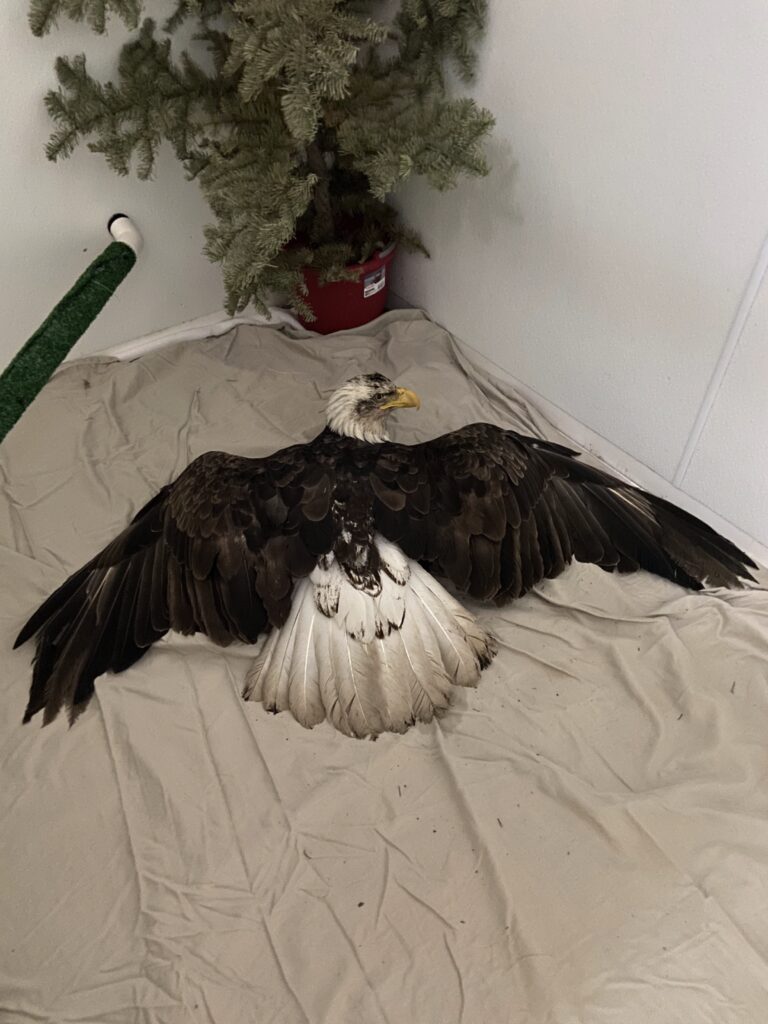
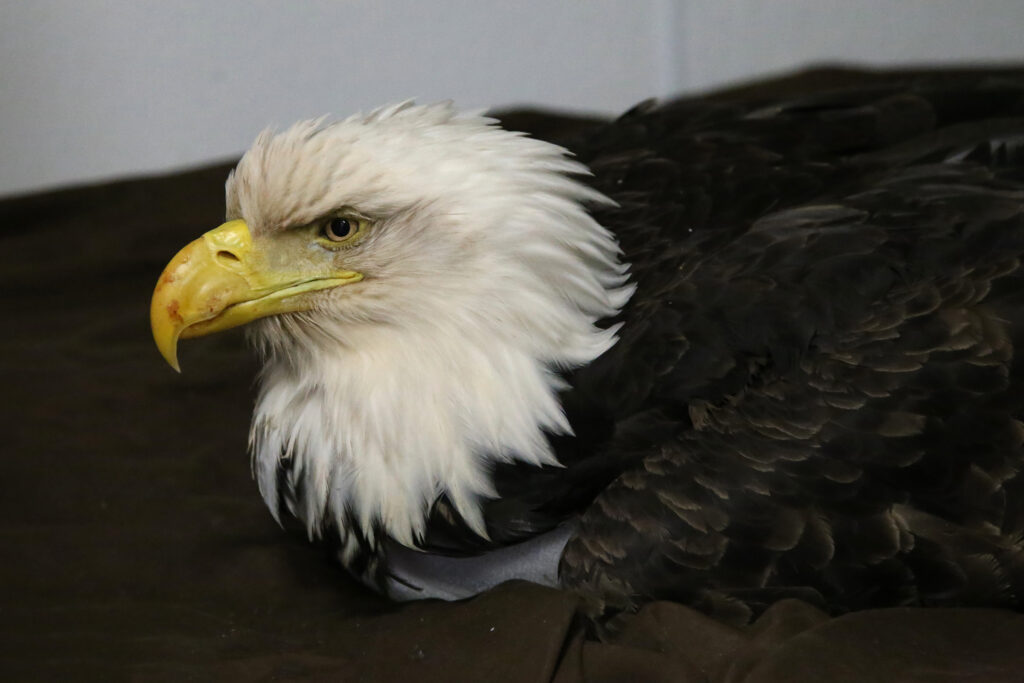
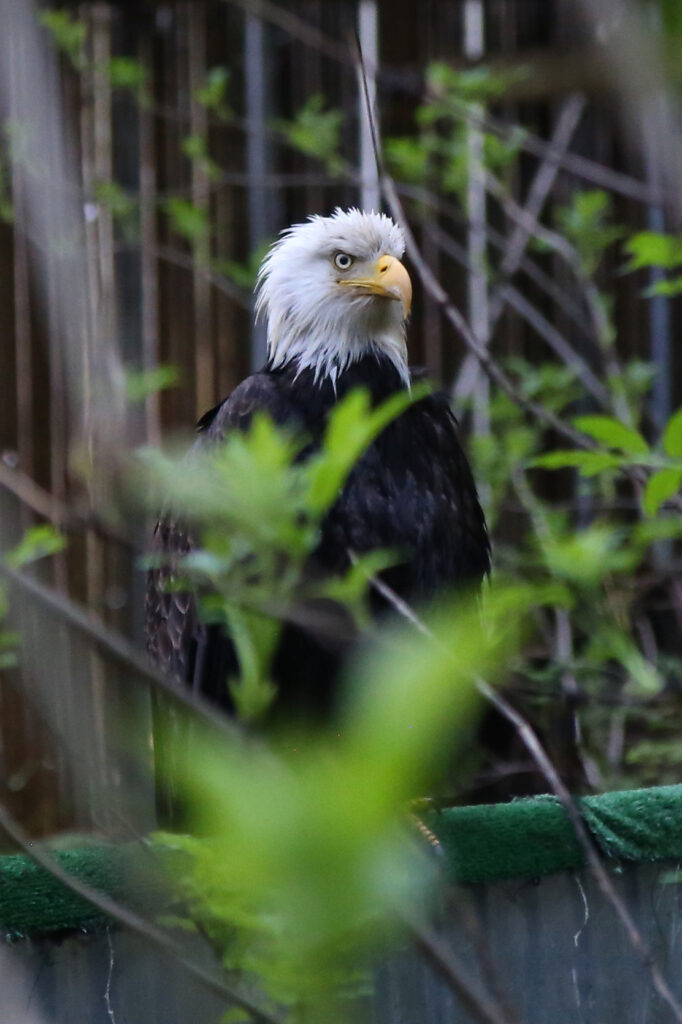
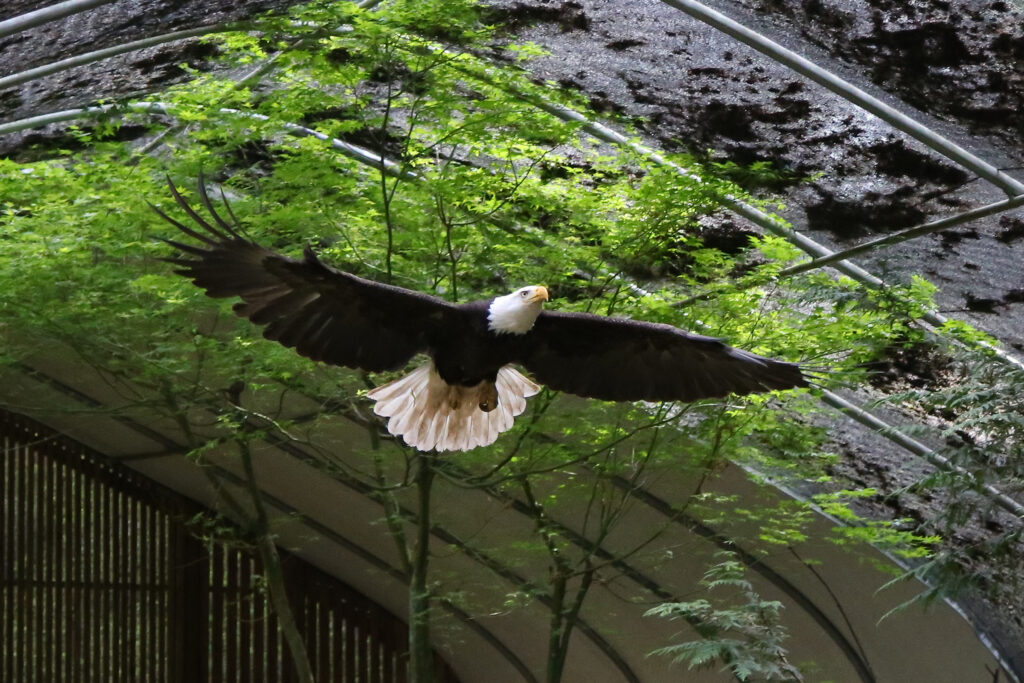
How can we tell that Spring is on its way? Three bald eagles have come into care at WCNC this month!
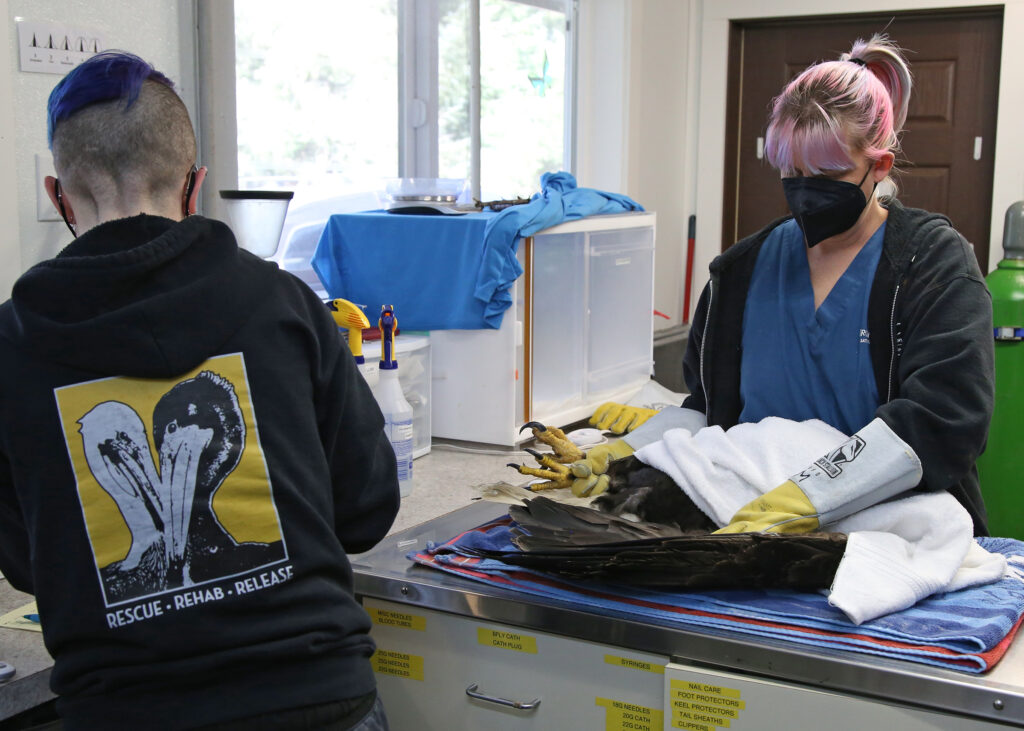
#25-28 was found in Seaside by the side of Hwy 101, and gathered quite a crowd of concerned onlookers before they were contained and brought to WCNC. After an exam and bloodwork, the bird was found to be emaciated, anemic, and slightly hypothermic, but tested negative for lead. Staff began supportive care with fluid therapy, heat support, and a carefully administered tubing diet. The patient hung on for just over a week, but then began to decline and died after 8 days in care. The cause of the emaciation remains unknown. WCNC deeply appreciates the efforts of the compassionate citizens and volunteers who came to this bird’s aid and worked together to get them to our hospital.
UPDATE 3/12 :#25-35 appeared to have sustained some head trauma after a vehicle strike near Clatskanie, and an exam revealed limited leg function. Unfortunately, despite a week of intensive care, #25-35 did not regain the use of their legs. X-rays revealed an abnormality in the spine – a possible fracture that likely affected their leg function. Because the prognosis for this type of injury after a week is extremely poor, the eagle was euthanized to prevent any further suffering.
#25-36 was rescued after they were found on their back in a driveway in Astoria. Aside from some foot abrasions, staff noted no other abnormalities on exam. Bloodwork showed an elevated lead level, so this eagle needed x-rays to check for remaining lead in the GI tract. No lead bodies were found, so staff will proceed with chelation therapy, which uses injectable drugs that bind heavy metals in the body, and removes them via excretion of urine/feces. Several rounds of chelation may be required to reduce the lead levels. For now, the bird is standing and eating well, and staff is optimistic about its recovery.
NEEDS
Clearing out your freezer? If you have frozen cuts of beef, elk, or venison you’d like to donate, eagle patients would be delighted! Please call 503-338-0331 to arrange drop-off.
We also need raptor hoods! Sheets and blankets work OK to cover birds’ heads, but raptors often get overheated and stressed out. Raptor hoods are a more elegant solution. We would love gift cards to Mike’s Falconry Supplies: https://www.mikesfalconry.com/product-category/gifts/gift-certificates/
COSTS
- LeadCare II Testing Machine $2700
- Test Kit $500 (cost per test ~$10)
- Calcium EDTA (chelation drug, 1 month supply) $50
- DMSA (chelation drug, 1 month supply) $140
- Meloxicam, 200ml bottle $100
- Zinc tablets, 100ct tablets $5
- Calcium carbonate, bulk bag $10
- Vitamin C, 100ml bottle $6
- Iron Dextran, 100ml bottle $10
- Radiographs x 2 $400
- Staff time (2.5h/day x 30 days) = $1500
TOTAL: $5421